
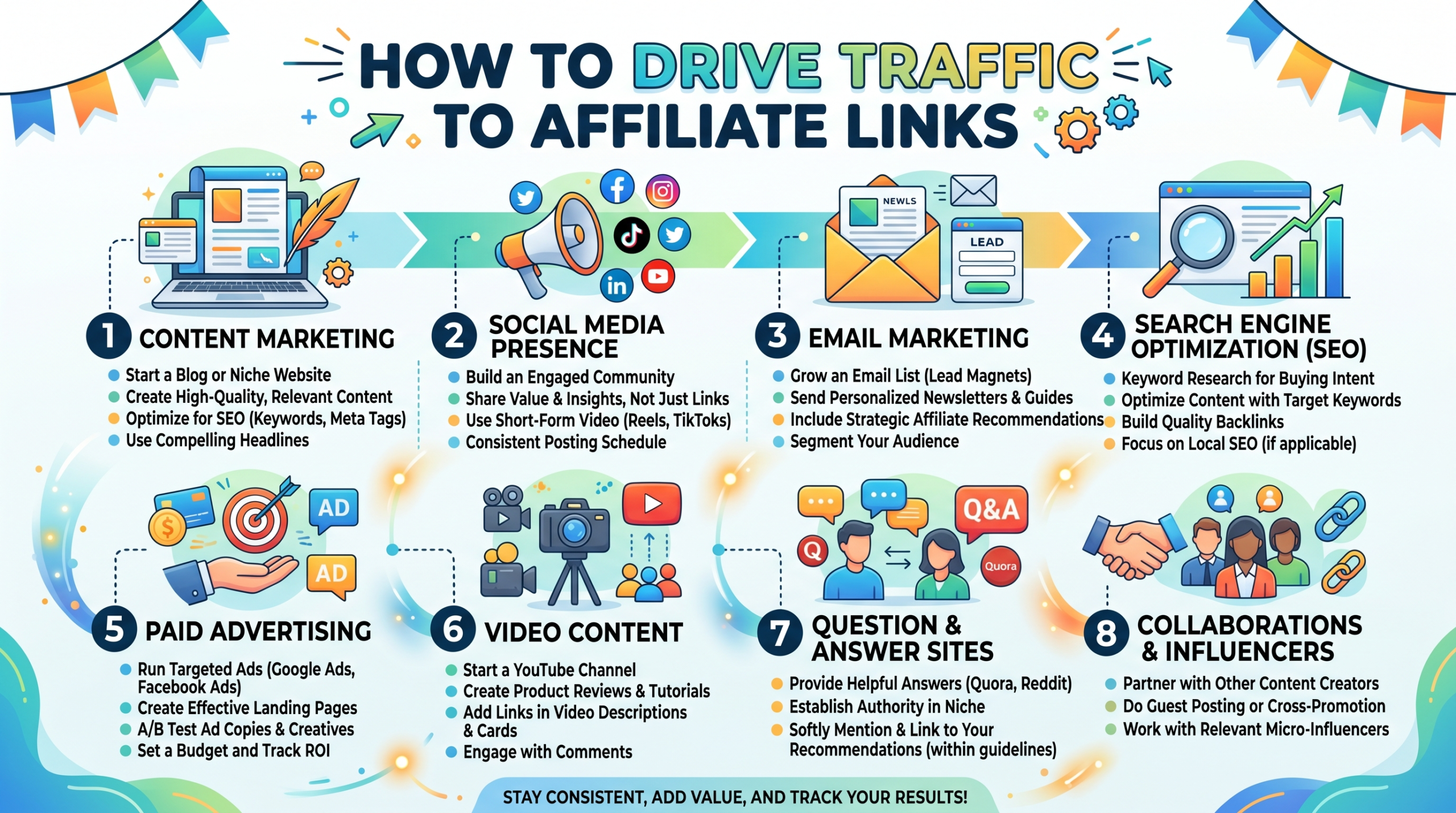
Driving traffic to affiliate links might sound like a game of luck, but savvy use of content marketing and SEO will make it less of a gamble. SEO influences how online users discover your content. Basically, it’s the freeway your content takes to meet your audience.
Quality content is king, and when I say quality, I mean stuff that real people, like your neighbor or your friends, will actually enjoy and find useful. Write for humans first, then for search engines. Trust gets built on genuine, valuable content that addresses real concerns, not keyword-stuffed paragraphs.
Keywords are your little nuggets of gold. Long-tail keywords are especially useful since they closely match user queries. Do your homework on keyword research and sprinkle them naturally throughout your text. But remember, no stuffing! Users and search engines both smell desperation miles away.
Your content should educate, entertain, or inspire action. Say goodbye to boring and hello to engaging. Have fun with it! However, let’s keep it tasteful and steer clear of the hard sell. People don’t like feeling pressured, and that’s one surefire way to scare them off the buying track.
Consistency is your best friend here. A planned content calendar helps you stay on track. Regularly updated content signals to search engines that your site is alive and kicking, which can improve your rankings. Besides, showing up regularly keeps your audience engaged.
Harnessing Social Media Platforms for Traffic Diversification
Social media’s like your next-door neighbour always buzzing with activity. This makes it a vibrant hub for driving traffic to your affiliate links. The trick is figuring out which platforms suit your needs and your audience’s hangout spots. Not every app under the sun will be right for you, so invest time in understanding where your audience scrolls the most and why.
Posting shareable content is like sending little digital invitations to your affiliate links. The more engaging and relatable your posts, the more likely your followers are to click, comment, and share them with their crew. Images, short videos, and quick reels are getting a lot of love these days and can cause a ripple effect.
Live sessions are where you get to shine. They offer an instant way to connect with your audience on a personal level. Share tips, host Q&As, or sneak in a few secrets about your products. Similarly, stories are quick, impactful ways to showcase snippets that keep people coming back for more.
Partnering with influencers can serve as a powerful way to amplify your reach. Collaboration isn’t about flashing your products but aligning with people who resonate with your ethos and further the story you’re telling.
Tracking and analyzing social media metrics is how you keep the engine running smoothly. Dive into those insights and adjust your strategies accordingly. It’s a world that’s ever-evolving, so staying flexible is vital.
Building an Email Marketing Strategy for Direct Engagement
Email isn’t just about sending out newsletters. It’s a personal way to connect with your audience right in their inbox. Think of it as having a direct line to your subscribers, where you can engage without the noise of social media algorithms.
Personalized campaigns can work wonders. Tailoring your messages to different segments lets your subscribers feel special, like you really get them. This also ensures the content they’re receiving is relevant, which can ramp up those click-through rates to your affiliate links.
The subject line acts like your first impression; it’s what gets your email opened in the first place. Aim for short, eye-catching ones that make your audience curious enough to open your email.
Once they’re in, provide value. Whether it’s exclusive deals, insider tips, or just high-quality content, keep them interested and engaged. It’s not just about what you want them to do, but how you can serve their needs while doing it.
Understanding email analytics helps you pinpoint what’s working and what’s not. Click and open rates, as well as conversion stats, feed back into how you tweak your strategy. It’s an ongoing process, but with each tweak, you’re getting closer to optimizing your results.
Build a platform to work from and see your business grow
Here’s a little transparency: Our website contains affiliate links. This means if you click and make a purchase, we may receive a small commission. Don’t worry, there’s no extra cost to you. It’s a simple way you can support our mission to bring you quality content.”